Mold in Your Sarasota Home? Here’s What the IICRC S520 Standard Actually Says
Contents
If you’ve found mold in your property, you’ve probably already searched the internet and been hit with a wave of conflicting advice. Bleach it. Don’t bleach it. Paint over it. Tear it all out. The confusion is understandable — mold remediation is a licensed specialty with a specific technical standard, and most of what’s written online is either oversimplified or outright wrong.
This article explains exactly how professional mold remediation works according to the IICRC S520 Standard — the industry benchmark that certified remediators like Above & Beyond follow on every job.
What is the IICRC S520?
The IICRC S520 Standard and Reference Guide for Professional Mold Remediation is the definitive industry document for mold remediation in the United States. It defines the proper assessment, containment, removal, cleaning, and verification protocols for mold-affected properties.
At Above & Beyond, our IICRC certification (number 57858351) and Florida mold remediation licence (MRSR3802) mean we are legally required to follow these protocols on every job.
Important: Florida is one of only a few states with mandatory mold remediation licensing. Always verify a contractor’s MRSR licence number before allowing any work to begin.
The Three Mold Conditions: How Bad Is It?
The S520 Standard defines three Conditions of mold contamination:
Condition 1 — Normal Fungal Ecology
This is the baseline. Some mold spores exist in every building — this is normal and unavoidable. No remediation required. The goal of all remediation work is to return a space to Condition 1.
Condition 2 — Settled Spores
Mold spores from an affected area have settled on surfaces in an otherwise normal area. There may be no visible growth, but spore counts are elevated. This requires cleaning and addressing the moisture source.
Condition 3 — Active Mold Growth
Actual mold colony growth is present. This requires full S520-compliant remediation — containment, physical removal, HEPA vacuuming, antimicrobial treatment, and independent post-remediation verification. This is what most homeowners are dealing with when they call us.
Note: The colour of mold is not a reliable indicator of hazard level. “Black mold” is a commonly misused term. Only professional assessment can determine actual risk.
The S520 Remediation Process — Step by Step
Step 1: Assessment
A proper assessment identifies the extent of contamination, the moisture source, and the affected materials. We use moisture meters and thermal imaging to map hidden moisture — because mold visible on a surface is almost always the result of a moisture problem inside a wall, floor, or ceiling cavity you can’t see.
Critically: the moisture source must be identified and corrected before remediation begins. Remediating mold without fixing the source is like mopping the floor while the tap is still running.
Step 2: Containment
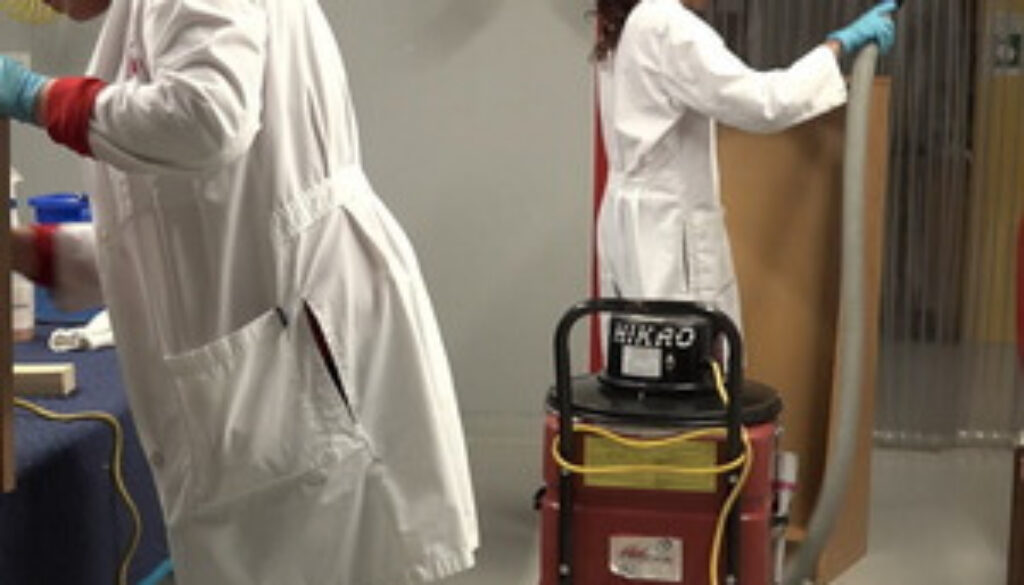
Poly sheeting barriers are erected around the affected area and negative air pressure is established using HEPA-filtered air scrubbers. This prevents spores from spreading to clean areas during removal. Any HVAC system serving the affected area is shut down or isolated.
Step 3: Physical Source Removal
This is the most important step — and the one most commonly skipped by unqualified contractors.
Per S520, physical removal of mold-contaminated materials is the primary remediation method. For porous materials (drywall, insulation, ceiling tiles, carpet), this means removing and disposing of the contaminated material entirely. There is no chemical that can penetrate porous materials and guarantee eradication of mold.
The bleach myth: Bleach is mostly water (typically 90%+). Applying it to porous surfaces like drywall adds moisture — the exact opposite of what mold remediation requires. Per S520, bleach is not an acceptable substitute for physical removal on porous materials.
Step 4: Cleaning and Antimicrobial Treatment
After physical removal, all surfaces in the containment area are HEPA vacuumed then damp wiped using detergent-based cleaning solutions. Antimicrobial treatment is a secondary finishing step — after physical cleaning, not instead of it.
Step 5: Post-Remediation Verification (PRV)
Independent post-remediation verification — ideally by a qualified Indoor Environmental Professional (IEP) who was not involved in the remediation — confirms the space has returned to Condition 1 before containment is removed. We recommend independent PRV on every job.
Why Sarasota Properties Are Particularly Vulnerable
- Year-round humidity averaging 74% — mold thrives above 60% relative humidity
- Hurricane season flooding — storm surge creates immediate Condition 3 scenarios
- HVAC systems running year-round — blocked condensate lines cause ceiling cavity moisture that goes undetected for weeks
- Slab construction — moisture wicking through concrete creates chronic humidity in flooring systems
- Older construction — homes from the 1970s–1990s often have inadequate vapour barriers
“In 15 years serving Sarasota, the most common mistake we see is clients taking care of water extraction themselves and then discover that due to the Florida climate, microbial growth is visibly evident — creating an even bigger, costly issue.”
Jacob, Project Manager, Above & Beyond Restoration
Frequently Asked Questions
How do I know if I have mold?
The most reliable signs are a persistent musty smell, visible dark staining on walls or ceilings, and unexplained respiratory symptoms that improve when you leave the building. If you’re not sure, a professional assessment is the only reliable way to know.
Can I clean mold myself?
For very small areas on non-porous materials (tile, glass, metal) caught early — possibly. For anything on drywall, wood, insulation, carpet, or ceiling tiles — no. Disturbing mold without proper containment spreads spores throughout the property. In Florida’s climate, a small problem becomes a significant one very quickly.
Does homeowner’s insurance cover mold remediation?
It depends on the cause. Mold resulting from a sudden, covered water event (burst pipe, appliance failure) will often also cover mold remediation. Mold from long-term moisture or deferred maintenance is typically excluded. Document everything and report promptly.
How long does mold remediation take?
A single-room remediation typically takes 1–3 days. Larger jobs involving multiple rooms or structural materials can take 1–2 weeks. We provide a clear scope of work before any remediation begins.
What areas do you serve?
All of Sarasota and Manatee County — Sarasota city, Bradenton, Lakewood Ranch, Venice, North Port, Nokomis, Siesta Key, Longboat Key, Anna Maria Island, Palmetto, Englewood, and surrounding communities. Call 941-500-3473 to confirm coverage.
The Above & Beyond Approach
Our mold remediation licence (MRSR3802), IICRC certification (#57858351), and general contractor licence (CGC1535240) mean every job meets Florida’s legal requirements and the industry’s highest technical standards. We’ve been serving Southwest Florida since 1999 — doing the right thing, even when no one is looking.
If you’ve found mold — or you’re not sure — call us. 941-500-3473. Available 24/7.