Water Damage in Sarasota? Here’s What to Do in the Next 30 Minutes
Contents
- 1 Step 1: Stop the Source
- 2 Step 2: Make it Safe
- 3 Step 3: Document Before You Touch Anything
- 4 Step 4: Protect What You Can
- 5 Step 5: Call a Licensed Restoration Professional Immediately
- 6 Understanding Water Categories: Why It Matters
- 7 Why Sarasota Homeowners Face Unique Water Damage Risks
- 8 Frequently Asked Questions
- 9 The Above & Beyond Promise
- 10 Water Damage Sarasota: Why Speed Determines the Outcome
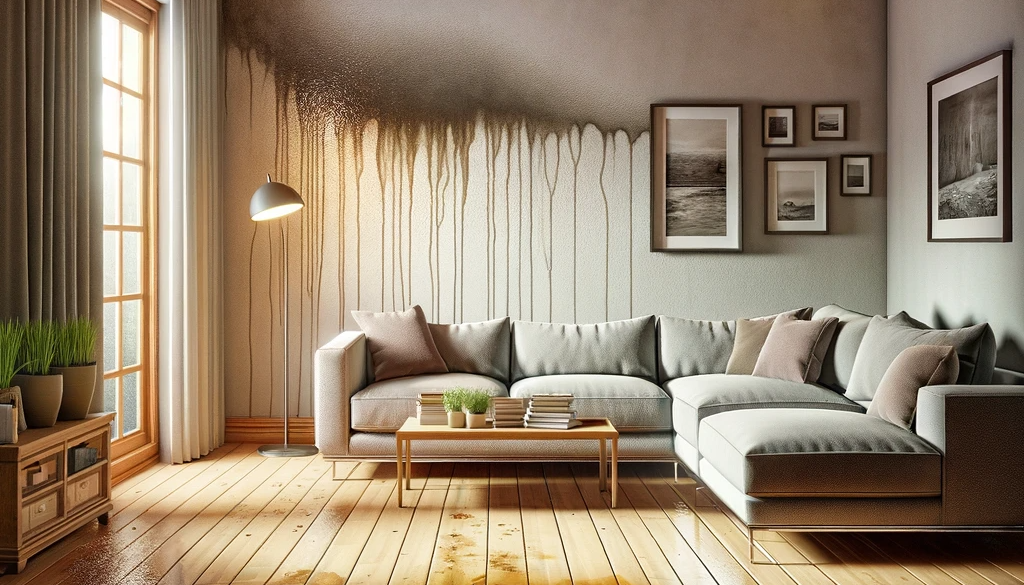
Water damage Sarasota homeowners face doesn’t wait for business hours. Whether it’s a burst pipe at 2am, a washing machine overflow, or a slow leak that’s been quietly saturating your subfloor for weeks — the decisions you make in the first 30 minutes determine whether you’re looking at a manageable restoration or a gut job.
At Above & Beyond Restoration, we’ve been responding to water damage calls across Sarasota and Manatee County for over 25 years. We’ve seen what happens when homeowners wait, and we’ve seen the difference that fast, correct action makes. This guide gives you exactly what to do — step by step.
Step 1: Stop the Source
Before anything else, locate and stop the water. This sounds obvious, but in a panic it gets skipped.
- Burst supply line or pipe: Turn off the main water shutoff (typically near the water meter or where the main line enters your home)
- Appliance overflow (washing machine, dishwasher): Pull the plug and turn off the supply valve behind the unit
- Roof leak or storm intrusion: You can’t stop rain — move to protecting contents and documenting immediately
- HVAC condensate overflow: Turn off your AC unit at the thermostat
Step 2: Make it Safe
Water and electricity are a lethal combination. Before you walk through standing water:
- Turn off electricity to affected areas at the breaker panel
- Do NOT use electrical appliances, extension cords, or your HVAC system in wet areas
- Wear rubber-soled shoes if you must enter a flooded space
- If the water is brown, has an odour, or came from outside or a drain — do not touch it. It may be Category 2 or Category 3 contaminated water under IICRC S500 standards. Leave it to professionals with proper PPE.
Step 3: Document Before You Touch Anything
Your insurance claim lives or dies on your documentation. Take photos and video before moving a single piece of furniture.
- Video walkthrough of every affected room — narrate what you’re seeing
- Close-up photos of the source (the failed pipe, the appliance, the roof penetration)
- Photos of all waterlines on walls, flooring, and ceilings
- Photos of damaged contents before you move them
Save everything to a cloud folder immediately. This footage is your evidence for the insurance adjuster.
Step 4: Protect What You Can
- Move electronics, documents, photos, and valuables to dry areas or upper floors
- Lay aluminum foil under furniture legs sitting in water — prevents rust and tannin stains on flooring
- Remove rugs from hard flooring — saturated rugs cause far more damage sitting on hardwood or tile
- Open interior doors to allow air circulation — but do NOT run household fans on Category 2 or 3 water sources
Step 5: Call a Licensed Restoration Professional Immediately
This is not the situation for a handyman or general contractor. Water damage restoration is a licensed, certified specialty. In Florida, mold remediation requires a separate state license (we hold MRSR3802). Working with an unlicensed company on a water loss can void your insurance coverage.
Above & Beyond Restoration serves all of Sarasota and Manatee County 24 hours a day, 7 days a week. Our IICRC-certified technicians (certification #57858351) arrive with industrial extraction equipment, thermal imaging cameras, and moisture meters to map exactly where the water has travelled — including inside walls, under flooring, and in ceiling cavities you can’t see.
Understanding Water Categories: Why It Matters
Not all water damage is equal. The IICRC S500 Standard classifies water into three categories:
- Category 1 (Clean Water): From a sanitary source — burst supply pipe, clean appliance overflow. Lowest health risk. Can deteriorate to Cat 2 within 24–48 hours if not extracted promptly.
- Category 2 (Grey Water): Contains significant contamination — washing machine discharge, dishwasher water, HVAC condensate overflow. Moderate health risk. Requires sanitisation protocols.
- Category 3 (Black Water): Grossly contaminated — sewage backup, groundwater flooding, hurricane storm surge, seawater. High health risk. Porous materials must be removed and disposed of — they cannot be dried and saved.
Water categories escalate. Per IICRC S500, a Category 1 loss can deteriorate to Category 2 within 24–48 hours as bacteria multiply in Florida’s heat. Response time directly determines the scope, health risk, and cost of the remediation.
Why Sarasota Homeowners Face Unique Water Damage Risks
- Year-round humidity: Sarasota averages 74% relative humidity. Wet materials take longer to dry and mold grows faster.
- Hurricane season (June–November): Storm surge, wind-driven rain, and flooding create Category 2 and 3 losses simultaneously.
- Aging construction: Many Sarasota homes built in the 1970s–1990s have cast iron drain lines that corrode and fail.
- HVAC condensate: Florida AC systems run nearly year-round. Blocked condensate drain lines are one of our most common calls — often discovered only after mold has begun growing in the ceiling.
- Slab construction: Most SWFL homes are built on concrete slabs. Slab leaks from corroded plumbing are notoriously difficult to detect early.
“In 15 years serving Sarasota, the most common mistake we see is clients taking care of water extraction themselves and then discover that due to the Florida climate, microbial growth is visibly evident — creating an even bigger, costly issue.” — Jacob, Project Manager, Above & Beyond Restoration
Frequently Asked Questions
How quickly does mold grow after water damage in Sarasota?
In Sarasota’s heat and humidity, active mold growth can begin in as little as 24–48 hours after a water event. This is why same-day water extraction and drying is critical — not optional.
Does homeowner’s insurance cover water damage in Florida?
Standard homeowner’s insurance typically covers sudden and accidental water damage — burst pipes, appliance overflows, and roof leaks from storms. It does not cover flooding from storm surge or rising groundwater (that requires separate flood insurance). Document everything immediately and report your claim promptly.
Can I dry out water damage myself?
For very minor surface water on non-porous materials caught immediately, basic cleanup may be appropriate. But for any water that has penetrated walls, flooring, subflooring, insulation, or drywall — professional drying is essential. Without moisture meters and professional drying equipment, hidden moisture leads to mold within days in Florida’s climate.
How long does water damage restoration take?
A standard Category 1 water loss typically takes 3–5 days to dry to IICRC standard. Category 2 or 3 losses, or losses involving structural drying, can take 7–14 days. We provide daily moisture readings so you always know where things stand.
Do you serve areas outside Sarasota?
Yes. Above & Beyond serves all of Sarasota and Manatee County including Bradenton, Lakewood Ranch, Venice, North Port, Nokomis, Palmetto, Englewood, Anna Maria Island, Longboat Key, and surrounding communities. Call 941-500-3473 and we’ll confirm coverage for your location.
The Above & Beyond Promise
We started Above & Beyond in 1999 because Southwest Florida deserved a restoration company that operated with integrity — one that would tell you the truth about what your property needed, do the work correctly the first time, and stand behind it. Twenty-five years later, that’s still who we are.
If you’re dealing with water damage right now — call us. We answer 24 hours a day: 941-500-3473. Licensed GC (CGC1535240) | Mold Remediation (MRSR3802) | IICRC Certified (#57858351).
Water Damage Sarasota: Why Speed Determines the Outcome
In Sarasota’s climate, water damage left unaddressed for even a few hours can become a mold remediation project. The combination of ambient temperature and humidity creates perfect conditions for mold spores to colonise wet building materials — drywall, insulation, wood framing — within 24 to 48 hours of a water event.
This is why our water damage Sarasota response is built around speed. From the moment you call, our goal is to have a crew on site extracting water and setting drying equipment as fast as possible. Every hour matters.
Our equipment includes truck-mounted extraction units, commercial air movers and dehumidifiers calibrated to the specific moisture load in your property. We don’t dry by guesswork — we use calibrated moisture meters and thermal imaging to track drying progress and confirm when your structure meets the standard for rebuild.